This is presented as a genuine, unresolved dispute between credentialed experts on both sides, not a case to be won. Where a claim traces to advocacy material rather than an institutional body, that's said explicitly.
Why age & materials matter
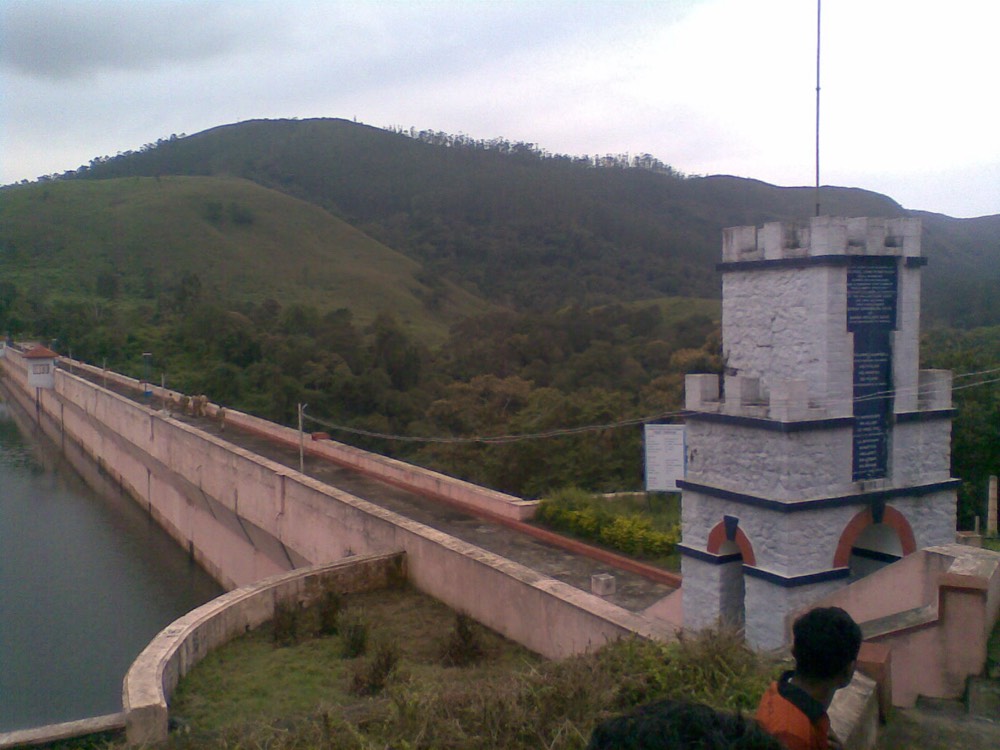
The dam's faces are rubble masonry; its core, roughly 60% of total volume, is lime-surkhi concrete, lime bound with burnt brick powder, not cement. Lime mortar is water-soluble and leaches out over decades of contact with reservoir water. Tamil Nadu's own officials have acknowledged to the press that roughly 35 tonnes of lime leach out of the dam annually. Kerala-aligned technical commentary (not an institutional body, flagged as such) argues the 1980s concrete reinforcement has been "neither sufficient nor highly efficient" at compensating for lime already lost from the core.
A 2011 underwater (ROV) survey ordered by the Supreme Court's own Empowered Committee, a body that ultimately cleared the dam as safe, found "irreparable deterioration… in all 34 sections of the dam" examined, from erosion of lime-surkhi mortar at rubble joints. This finding came from the same institutional process that produced the "safe" verdict, which is why it's treated here as well-corroborated rather than advocacy.
Seismicity
The Idukki region sits in Seismic Zone III, moderate risk on India's four-zone scale, with three named regional earthquakes on record: Nedumkandam (M4.5, 1988) and two at Erattupetta (M5.0 in 2000, M4.5 in 2001). A 2009 IIT Roorkee study concluded the dam could be damaged by a magnitude-6.5 earthquake within 16 km, even at the lower 136 ft level, identified 22 fault lines within 300 km of the site, and calculated a peak ground acceleration of 0.16g for the area, higher than the 0.05–0.1g regional estimate used by the Global Seismic Hazard Assessment Program. A sequence of tremors on 26 July and 18 November 2011 produced real public panic and reports of a new crack; Kerala's own emergency expert team, inspecting within days, could not confirm within its short visit whether the crack was earthquake-caused, but did find that piezometers inside the dam's own inspection galleries were non-functional, a genuine and undisputed instrumentation gap at the time.
The 1979 panic and after
Safety concerns first crystallized into a major crisis in 1979 when cracks and leaks were found, amplified nationally by the same year's Machchhu Dam-II failure in Morbi, Gujarat, which killed somewhere between an official ~1,800–2,000 and independent estimates of 5,000–10,000+ people (full detail: If It Breaks). The CWC recommended cutting the level to 136 ft and set out an emergency strengthening program. In 2021, with the reservoir at 139.85 ft, reported seepage reached roughly 139 litres/minute (about 2 lakh litres/day), up from 89 L/min five years earlier, and for comparison, the much newer, arch-type Idukki dam nearby seeps at only around 38 L/min, a disproportion Kerala-side commentators point to directly. Tellingly, both states admitted they couldn't reliably quantify total seepage, because it occurs through untracked pathways beyond what the inspection galleries capture; a former chairman of Kerala's own Mullaperiyar Special Cell, M.K. Parameswaran Nair, said as much publicly.
Also worth stating plainly: the dam's spillway is designed for a Probable Maximum Flood of 8,676 cumecs, against a largest flood actually recorded at the site of 8,453 cumecs (1943), a safety margin of only about 2.6%.
Conflicting expert findings
| Body | Year | Finding |
|---|---|---|
| Centre for Earth Science Studies (Kerala) | 1979 | Would not withstand a magnitude-6+ earthquake |
| IIT Roorkee | 2009 | Could be damaged by M6.5 within 16 km, even at 136 ft |
| CSMRS underwater survey | 2011 | Deterioration in all 34 sections examined |
| R.N. Iyengar Committee | ~2010s | Structurally weak at high water levels even without earthquake loading |
| Empowered Committee (Justice A.S. Anand) | 2010–13 | "Structurally, hydrologically and seismically safe"; cleared 142 ft |
| UNU-INWEH (UN University) | 2021 | Names Mullaperiyar among 6 dams globally meeting decommissioning-consideration criteria |
| Comprehensive Safety Assessment Committee (Balraj Joshi) | 2026, ongoing | Phase 1 inspection complete Sept 2026; full report pending |
Tamil Nadu's institutional position has consistently been that the dam is "safe in all aspects." Kerala officials have at times called it "a ticking time bomb." Both framings recur constantly in public debate; the table above is what the actual named bodies found, independent of either framing.
Reinforcement, actually done
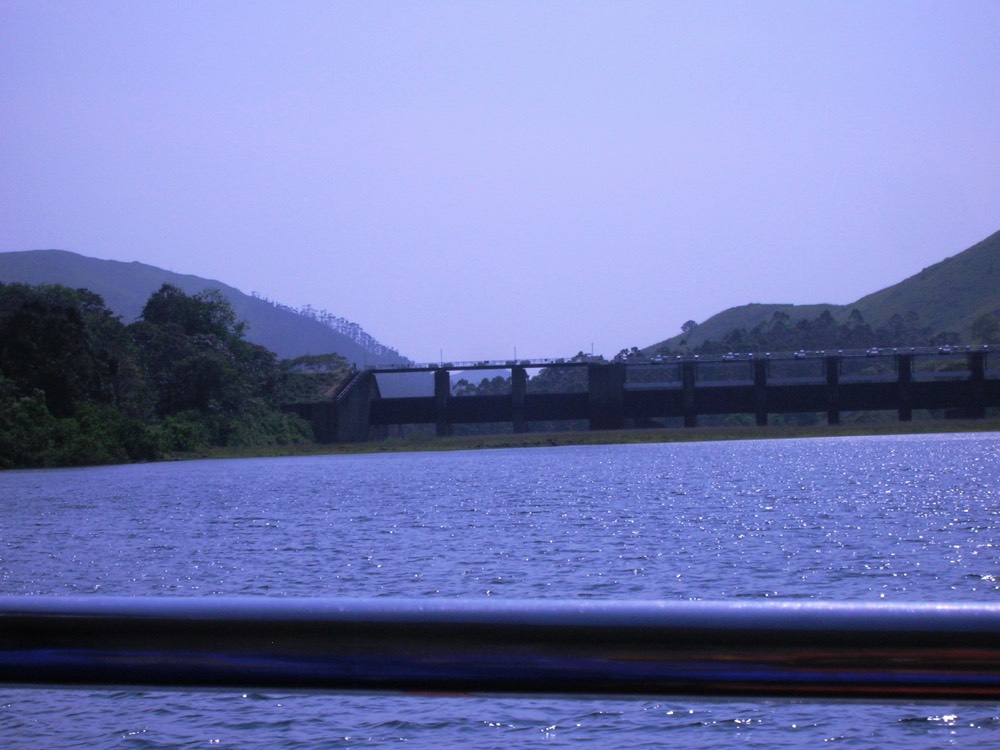
Not nothing: 1979–87 saw cement grouting, guniting of the upstream face, cable anchoring through the dam's length, an RCC cap above 145 ft, and a 10-metre concrete buttress on the downstream face. A 2018 Supreme Court order separately created a disaster-preparedness sub-committee under the National Disaster Management Authority, specifically to monitor Mullaperiyar. Ongoing borehole grouting continues today to counter lime leaching. What's still missing, per the Supreme Court's own March 2021 order: a completed, approved instrumentation plan, real-time monitoring of seepage, deformation and pore pressure, was still unresolved seven years after the 2014 safety clearance. And in proceedings cited by Mongabay India, the Central Water Commission itself told the Supreme Court that no comprehensive dam-safety review had been conducted for a 12-year period, an admission Kerala uses regardless of which side's underlying safety narrative is correct, since it shows the oversight machinery itself, not just the dam, has had real gaps.
Human stakes
Downstream districts most consistently named: Idukki, Kottayam, Ernakulam, Alappuzha, ultimately Kochi. Full detail on what a failure would actually mean, and which of these numbers hold up, is on If It Breaks.
Climate change
Kerala's government has explicitly cited climate change in a formal Supreme Court affidavit, pointing to "climate change-induced erratic and heavy rainfall" as part of its case for a new dam. The actual regional data is more nuanced than that framing implies: a Kerala-government-commissioned study found the state's monsoon rainfall in a statistically significant decreasing trend overall (1901–2015), but flagged Idukki district specifically, where Mullaperiyar sits, as one of the few showing a not-yet-statistically-significant increasing trend, explicitly citing "the presence of a number of dams" as the reason this exception matters.
How it compares to peer dams
Every dam-safety framework (ICOLD, FEMA, ANCOLD, India's own NDSA) scores a dam on two separate axes: consequence of failure, and likelihood, age, material, condition data. Mullaperiyar's consequence rating isn't contestable: with 3.5–10 million people downstream, it sits at the extreme ceiling of every hazard scale that exists. The likelihood axis is where the real debate lives, and it rests on a genuine evidence gap rather than a simple "it's old" problem, since no international body publishes a masonry-gravity design-life standard either way.
The single most decisive comparison found in this entire research project: the 2021 UNU-INWEH report names Mullaperiyar as one of just six case-study dams worldwide meeting its criteria for decommissioning consideration. What happened to the other five is the point.
| Dam | Country | Outcome |
|---|---|---|
| Elwha & Glines Canyon | USA | Removed (2011–2014) |
| Vezins & La Roche-qui-Boit | France | Removed |
| Arase | Japan | Removed, Japan's first dam removal |
| Mactaquac | Canada | Committed to a funded rehabilitation program, scheduled to 2068 |
| Kariba | Zambia/Zimbabwe | Underwent a large, World Bank-financed structural rehabilitation |
| Mullaperiyar | India | Neither removed nor under a funded, scheduled program, the only one of the six unresolved |
Every other dam in Mullaperiyar's own internationally-recognized peer group has reached a resolved outcome. That pattern points toward the interstate governance deadlock covered on The Dispute as the actual obstacle, more than any unresolved technical question about the structure itself.
Closer to home: Krishna Raja Sagara (KRS) Dam in Karnataka is the closest material twin, also pure surkhi mortar, no cement, ~95 years old; Karnataka's High Court banned blasting within 20 km of it in 2024 as a precaution. Tungabhadra Dam is the only other large Indian dam built the same way, and one of its gates failed outright in August 2024, attributed in part to 70+ years of wear. And Khadakwasla Dam in Pune, a similarly old masonry dam, was fully rebuilt with enlarged capacity after being overwhelmed in 1961, India's own precedent for the remedy Kerala is requesting here. Notably, Mullaperiyar does not appear to be enrolled in India's own Dam Rehabilitation and Improvement Project (DRIP), the World Bank/AIIB-backed program that has already funded modernization work at comparable dams including KRS itself, despite being the country's single highest-profile aging-dam case.
Activism & misinformation
The Mullaperiyar Samara Samithi, formed in 2006 at Upputhara, Idukki, remains the main civil-society campaign group. The dispute has also produced real, damaging misinformation: a viral fake video during the 2018 floods falsely claimed the dam was collapsing; a Palakkad teenager was arrested in 2018 for a false "dam collapsed" voice message; an October 2025 bomb threat at the dam site turned out to be a hoax. Officials on both sides have repeatedly had to publicly separate substantiated engineering concern from rumor cycles, which is precisely why this site tries to keep the two apart.
Sources
- Kerala State Disaster Management Authority: Expert Group Report, 22 Nov 2011
- Down To Earth: "Blunder 999"; Mongabay India: "Debate over Mullaperiyar dam's safety continues"
- IIT Roorkee: Dam Break Analysis, Project WRC-1022/11-12 (2012)
- UNU-INWEH: "Ageing Water Storage Infrastructure: An Emerging Global Risk" (2021)
- KSDMA / Amrita Vishwa Vidyapeetham: regional rainfall downscaling report, 2017–18
- expert-eyes.org: independent technical commentary (advocacy-oriented, flagged where used)
- Onmanorama, The News Minute: 2021–2026 safety and seepage reporting