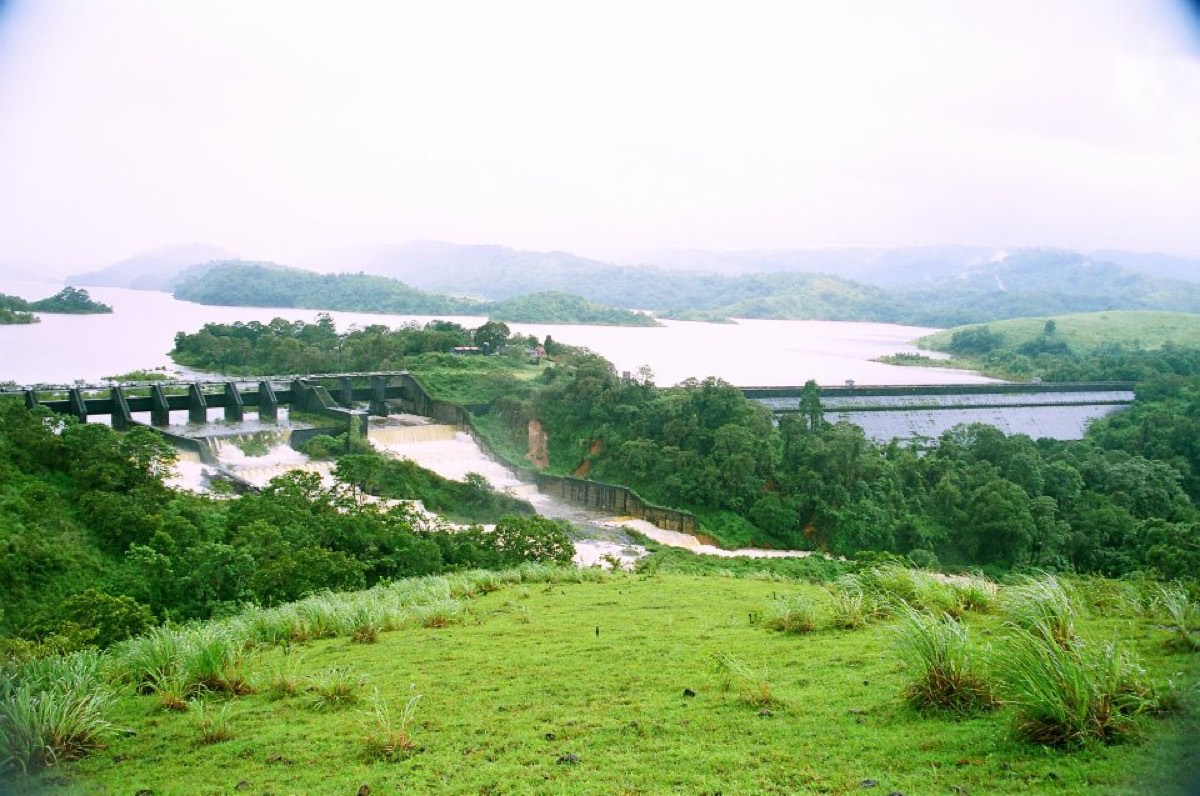
In 1886, a Travancore king signed a 999-year lease for a river, and reportedly said he was doing it "with my blood." The masonry dam built on it has no cement, no steel, and sits above millions of people. The dispute over its safety has run in the Supreme Court since 2001.
A famine, a king pressured into a 999-year lease, and a tunnel bored through a mountain by hand.
Lime-surkhi mortar, no cement, a gravity-fed tunnel. How it actually works, in specs and diagrams.
Kerala v. Tamil Nadu: the 1970 agreements, the 2014 judgment, and both states' cases, argued fairly.
The surveys, the cracks, the seismic studies: what the experts actually found, and where they disagree.
The only real hydraulic study ever done, against the viral claims that don't hold up.
999 hearths lit each January, a tiger reserve, a festival on a sandbank, a banned film.
The only real hydraulic study ever done puts water at the Idukki reservoir edge in 128 minutes, not the "45 minutes" you'll read elsewhere. And the widely-cited "35 lakh deaths" figure traces to a report that substituted Google Earth imagery for a real topographic survey. We separated the modeling from the noise.
Read the dam-break scenario →An 1895 dam the state's own scientists have flagged for 45 years, and still can't get replaced, despite offering to fund a new one outright.
Five districts, a century of irrigation, and a lease Kerala's own government re-signed in 1970, validated twice by the Supreme Court.
This site is an attempt at a genuinely balanced, source-checked reference on Mullaperiyar, a subject where most writing online picks a side: Kerala's safety anxiety, or Tamil Nadu's certainty of vindication. Every page here separates what's well-corroborated from what's disputed or unverified, names who is making each claim, and flags where sources disagree rather than silently picking one.
A few examples of that discipline, since it's easy to claim and hard to demonstrate. The "35 lakh deaths" figure that circulates in Kerala advocacy material is tracked to its original source and its methodology examined, not just repeated or dismissed. Both Tamil Nadu's and Kerala's legal and safety arguments are presented at their strongest, with an honest note on where each is weaker. And where our own research hit a dead end, whether that was an unverifiable quote or a document we couldn't access, we say so plainly rather than smoothing it over.